The History of Craftsmanship
Ebenistry is an ancestral art that has evolved through the ages, transforming raw matter into functional works of art. From the first rudimentary wooden creations to sophisticated furniture from the Renaissance period, to contemporary innovations, cabinetmaking tells a rich and varied history. This article takes you on a journey through time to explore the origins of artisanal cabinetmaking, its evolution over the centuries and its adaptation to contemporary challenges. By diving into this story, we will discover how yesterday’s cabinetmakers influenced those of today, combining tradition and innovation.
The Origins of Cabinetmaking
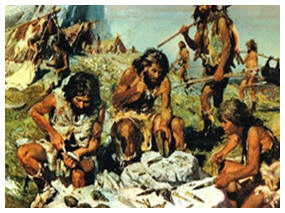
The origins of cabinetmaking date back to ancient times. From the
first civilizations, the art of working wood was essential for the
creation of furniture and everyday objects. Egyptians, for example,
were renowned for their advanced carpentry techniques, using local
and imported wood species. They created sumptuous interiors
decorated with furniture of great finesse, made thanks to then
revolutionary tools.
As cabinetmaking developed, the craftsmen began to perfect their techniques.
In China, cabinetmaking has become a refined art with the use of
rare woods and the creation of complex lacquered furniture.
Mediterranean cultures, on the other hand, have continued to refine
their skills, laying the foundations for artisanal practices that
will be found later in Europe. These cultures gave rise to styles
that would influence cabinetmaking through the ages.
Evolution during the Middle Ages and the Renaissance
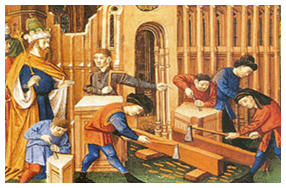
During the Middle Ages, cabinetmaking underwent a profound
transformation, largely thanks to new construction methods and the
development of guilds. These organizations have enabled the
transmission of knowledge and the development of techniques. The
craftsmen of the time introduced decorative elements such as wood
carving, which enriched the Gothic and Romanesque styles.
With the Renaissance, cabinetmaking reached new heights in Europe. The
classic inspiration led to the development of furniture of great
ornamental richness, often using techniques such as marquetry and
inlay. Artistic innovations combined with a better understanding of
materials have generated an aesthetic marked by elegance and
precision.
Cabinetry in the modern era
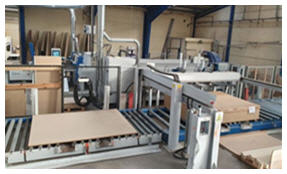
In the 18th and 19th centuries, cabinetmaking continued to
diversify. The Industrial Revolution has profoundly marked this era.
The new tools and machines have enabled faster and larger-scale
production, making craft furniture more accessible. Currents like
the Empire style, which drew its inspirations from the ancient, and
Art Nouveau, with its organic forms, dominated this period.
Subsequently, the cabinetmaking began to incorporate materials such as metal
and glass, giving rise to more refined and functional designs. The
quest for innovation in the 20th century saw the rise of movements
like the Bauhaus, which advocated a minimalist and utilitarian
approach, influencing artisanal production in the long term.
Contemporary cabinetmaking: between tradition and innovation
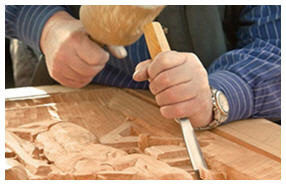
Nowadays, cabinetmaking is at a crossroads of tradition and
modernity. Craftsmen seek to preserve traditional techniques while
integrating contemporary methods. The use of digital technologies,
such as computer-aided design and 3D printing, is revolutionizing
the industry by enabling even more accurate and personalized
creations.
At the same time, a renewed interest in sustainable development
motivates cabinetmakers to use ecological materials and adopt
environmentally friendly practices. This new wave of cabinetmakers
is determined to create pieces that reflect both traditional
know-how and modern sensibility, showing that craftsmanship can
evolve without denying its origins.
Final reflections
| Period | Key Developments | ||
| Antiquity | Basic crafts, advanced Egyptian & Chinese techniques | ||
| Middle Ages & Renaissance | Transmission by guilds, Gothic ornamentation & renaissance | ||
| Modern time | Industrial revolution, new materials and styles | ||
| Contemporary | Digital Technology, Sustainability and Ecology | ||